The Texas Rig is one of the most popular and effective bass fishing techniques ever developed. Its simple design, weedless presentation, and incredible versatility make it a favorite among anglers of every skill level. Whether you’re fishing around weeds, fallen trees, docks, rocks, or brush piles, the Texas Rig allows you to present a soft plastic bait where bass are most likely to be hiding.
For beginners, the Texas Rig is an excellent place to start because it’s easy to learn and works with many different soft plastic baits. Once you understand the basic setup and how to fish it, you’ll have a technique that can catch bass throughout the year in almost any type of water.
In this guide, you’ll learn exactly how to rig a Texas Rig, choose the right equipment, fish it effectively, and avoid the common mistakes many beginners make. By the end of this article, you’ll have the confidence to tie on a Texas Rig and head to the water knowing you’re using one of the most proven bass fishing techniques ever created.
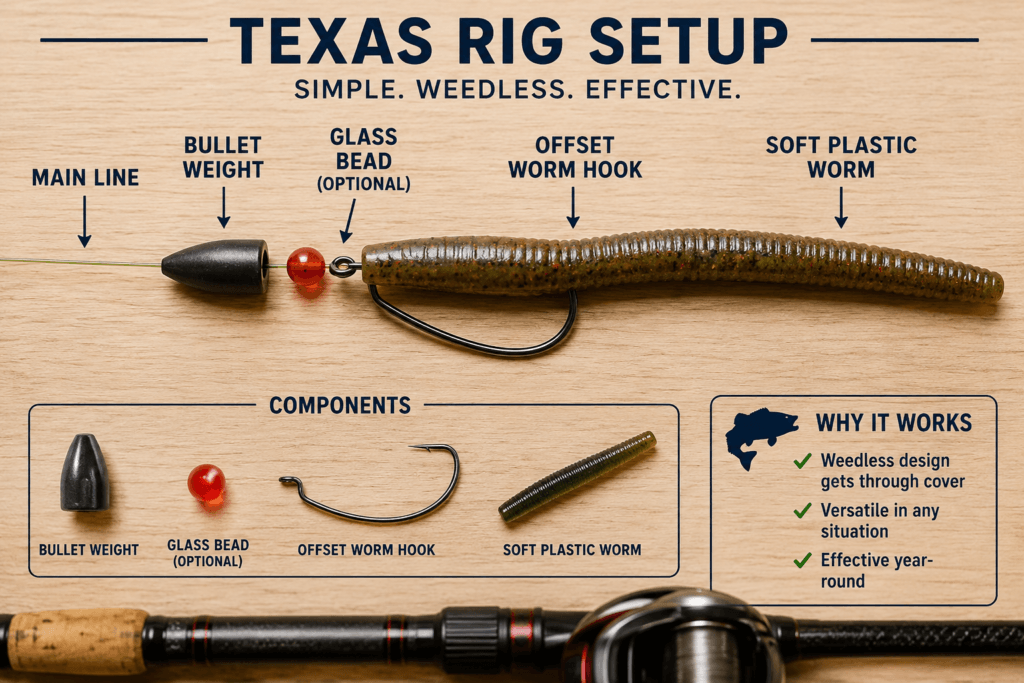
Components of a Texas Rig
One of the reasons the Texas Rig is so popular is its simplicity. It requires only a few basic components, all of which are readily available at most sporting goods stores. Understanding the purpose of each part will help you build a Texas Rig that matches your fishing conditions and increases your confidence on the water.
Fishing Line
The right fishing line depends on where and how you’re fishing. Braided line is an excellent choice around heavy vegetation because of its strength and sensitivity. Fluorocarbon offers low visibility and good abrasion resistance, making it ideal for clear water and rocky areas. Monofilament remains a solid option for beginners because it is affordable, easy to handle, and forgiving while learning.
Bullet Weight
The bullet weight helps your soft plastic bait sink and reach the desired depth. Lighter weights provide a slower, more natural fall, while heavier weights allow you to fish deeper water or penetrate thick vegetation more effectively.
Common Bullet Weight Sizes
| Weight | Best For |
|---|---|
| 1/8 oz | Shallow water and slow presentations |
| 3/16 oz | Light cover and general-purpose fishing |
| 1/4 oz | Excellent all-around choice for beginners |
| 3/8 oz | Moderate vegetation and deeper water |
| 1/2 oz+ | Heavy cover and thick grass |
Glass Bead (Optional)
Some anglers place a small glass bead between the bullet weight and the hook. The bead creates a clicking sound as the weight contacts it, which may help attract bass in stained water. While it’s optional, many anglers find it useful under certain conditions.
Offset Worm Hook
An offset worm hook is designed to hold soft plastic baits securely while keeping the hook point protected, creating the weedless presentation that makes the Texas Rig so effective. For most beginners, hook sizes between 3/0 and 4/0 work well with common soft plastic baits.
Soft Plastic Bait
One of the greatest strengths of the Texas Rig is its versatility. It can be used with a wide variety of soft plastic baits, including:
- Stick Worms
- Craw Baits
- Creature Baits
- Paddle Tail Swimbaits
- Lizards
- Tube Baits
- Finesse Worms
Each bait offers a slightly different presentation, allowing you to adapt to changing water conditions, bass behavior, and seasonal patterns.
Texas Rig Hook & Weight Selection Guide
Choosing the right hook and bullet weight is an important part of building an effective Texas Rig. While there are many combinations available, beginners don’t need to overcomplicate the process. A few common sizes will cover most bass fishing situations.
| Fishing Situation | Hook Size | Bullet Weight | Recommended Soft Plastic |
|---|---|---|---|
| Shallow water (less than 5 ft) | 3/0 | 1/8 oz | Stick Worm |
| General-purpose fishing | 3/0–4/0 | 1/4 oz | Stick Worm or Creature Bait |
| Moderate weeds and cover | 4/0 | 3/8 oz | Craw Bait or Creature Bait |
| Heavy vegetation | 4/0–5/0 | 1/2 oz | Beaver-Style Bait |
| Deep water (10+ ft) | 4/0 | 3/8–1/2 oz | Finesse Worm or Craw Bait |
Beginner Recommendation
If you’re buying your first Texas Rig setup, start with these three items:
- 3/0 Offset Worm Hook
- 1/4 oz Bullet Weight
- 5-inch Green Pumpkin Stick Worm
This simple combination is versatile, easy to fish, and effective in many lakes, ponds, and rivers. Once you’ve gained confidence, you can experiment with different hook sizes, weights, and soft plastic baits to match changing fishing conditions.
How to Rig a Texas Rig (Step-by-Step)
Rigging a Texas Rig is simple once you’ve done it a few times. Follow these steps carefully, and you’ll have a weedless presentation that’s ready to fish in almost any bass fishing situation.
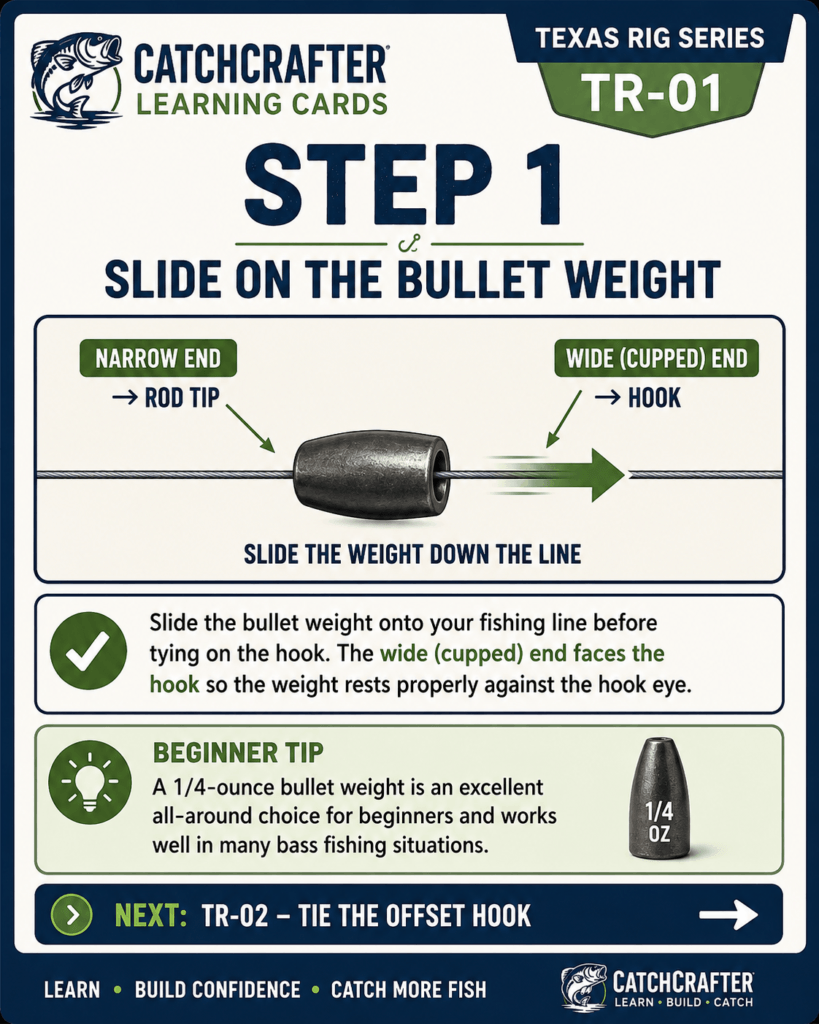
Step 1 – Slide on the Bullet Weight
Thread the bullet weight onto your fishing line before tying on the hook. Position the pointed (narrow) end toward the rod tip and the wide (cupped) end toward the hook. This allows the weight to move smoothly through weeds, brush, and other cover while resting properly against the hook eye.
Beginner Tip
A 1/4-ounce bullet weight is an excellent all-around choice for beginners and works well in many bass fishing situations.
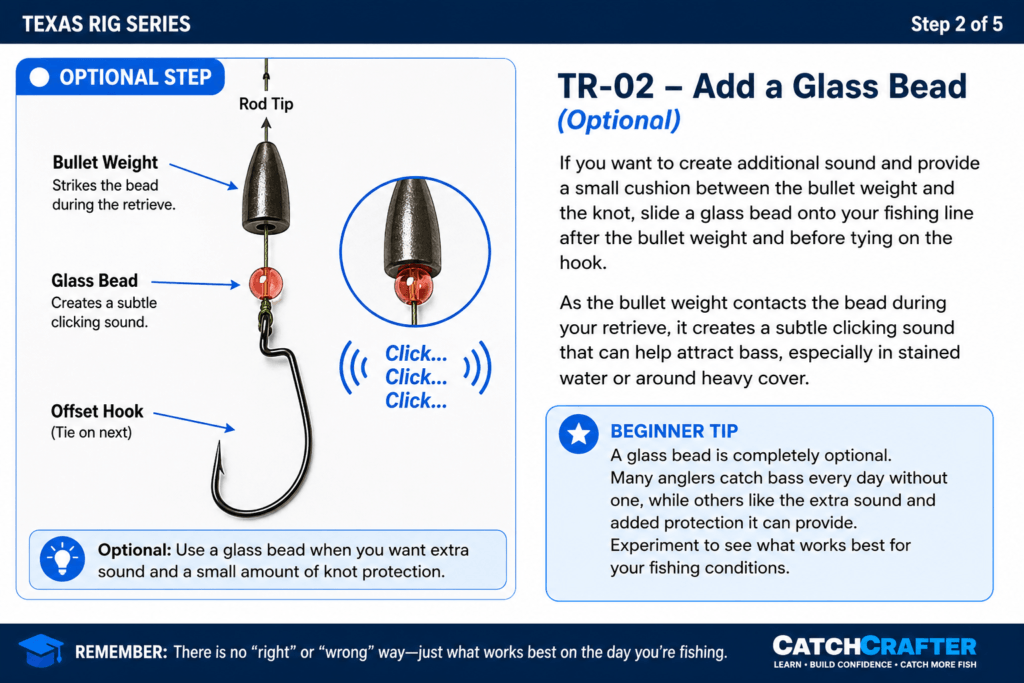
Step 2 – Add a Glass Bead (Optional)
If you want additional sound, slide a small glass bead onto the line after the bullet weight. As the rig moves through the water, the weight taps against the bead, creating a clicking sound that may attract bass, especially in stained water.
Beginner Tip
You don’t need a glass bead to catch bass. A standard Texas Rig without a bead catches plenty of fish. Think of the bead as an optional tool that can be helpful in certain fishing conditions.
Step 3 – Tie the Offset Hook
After adding the bullet weight and optional glass bead, tie your offset worm hook securely to the fishing line. I recommend the Palomar Knot because it’s easy to learn, exceptionally strong, and works well with monofilament, fluorocarbon, and braided fishing lines.
Take your time to tighten the knot evenly and trim the tag end, leaving a small amount of line so the knot remains secure.
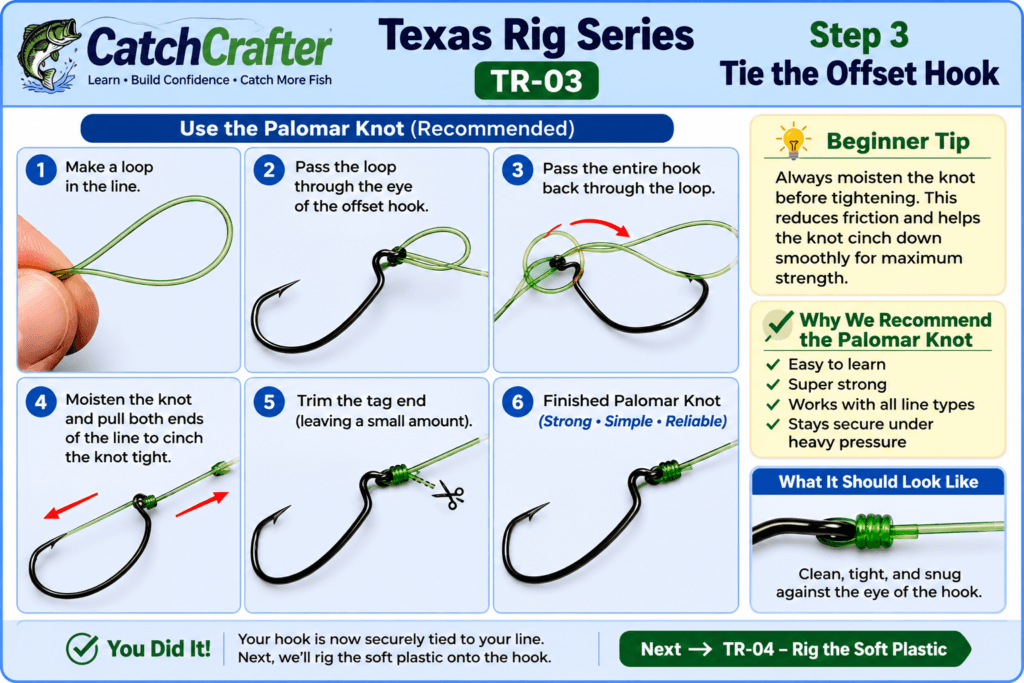
💡 Beginner Tip
Always moisten the knot with a little water or saliva before tightening it. This helps reduce friction, protects the fishing line, and allows the knot to cinch down smoothly for maximum strength.
Step 4 – Rig the Soft Plastic
Insert the hook point into the nose of the soft plastic and push it in about 1/4 inch before bringing the point out through the belly. Slide the bait up to the eye of the hook, rotate it 180 degrees, then measure where the hook should re-enter the body. Push the hook point straight through the bait so it hangs perfectly straight.
A properly rigged soft plastic should lie naturally on the hook without twists or bends. A crooked bait can spin during the retrieve and reduce its natural action, making it less effective.
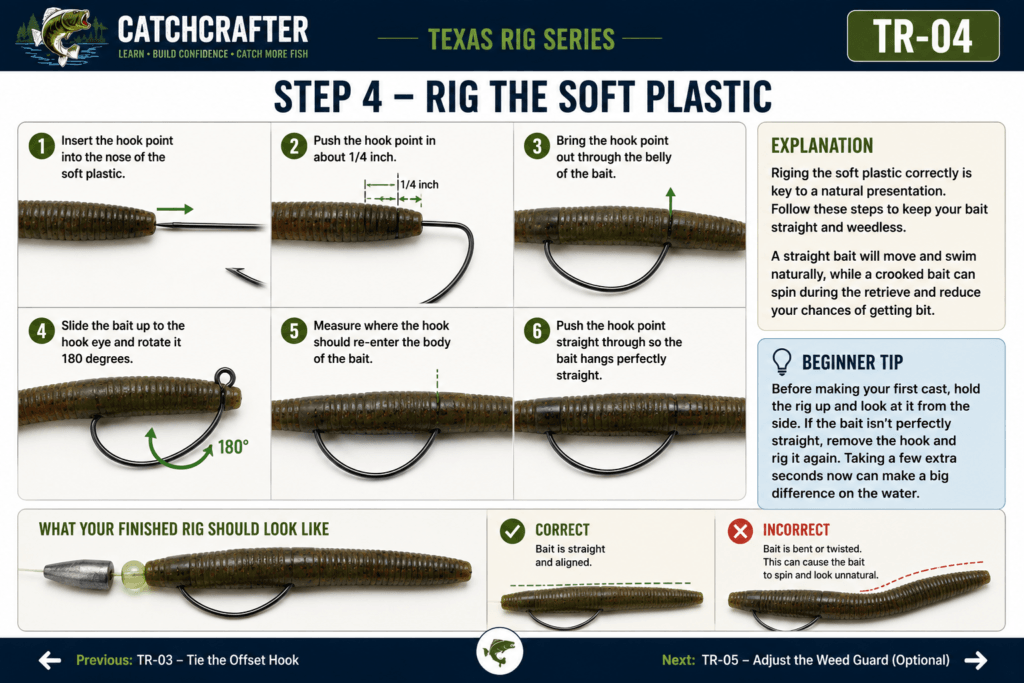
💡 Beginner Tip
Before making your first cast, hold the rig up and look at it from the side. If the bait isn’t perfectly straight, remove the hook and rig it again. Taking a few extra seconds now can make a big difference on the water.
Step 5 – Inspect Your Finished Texas Rig
Before making your first cast, take a moment to inspect your Texas Rig. The soft plastic should hang perfectly straight, the hook should be positioned correctly, and the bullet weight should slide freely on the line unless you’ve chosen to peg it.
A properly rigged Texas Rig moves naturally through the water and slips through weeds, brush, and other cover with fewer snags. Spending a few seconds checking your rig now can help you avoid problems once you’re fishing.
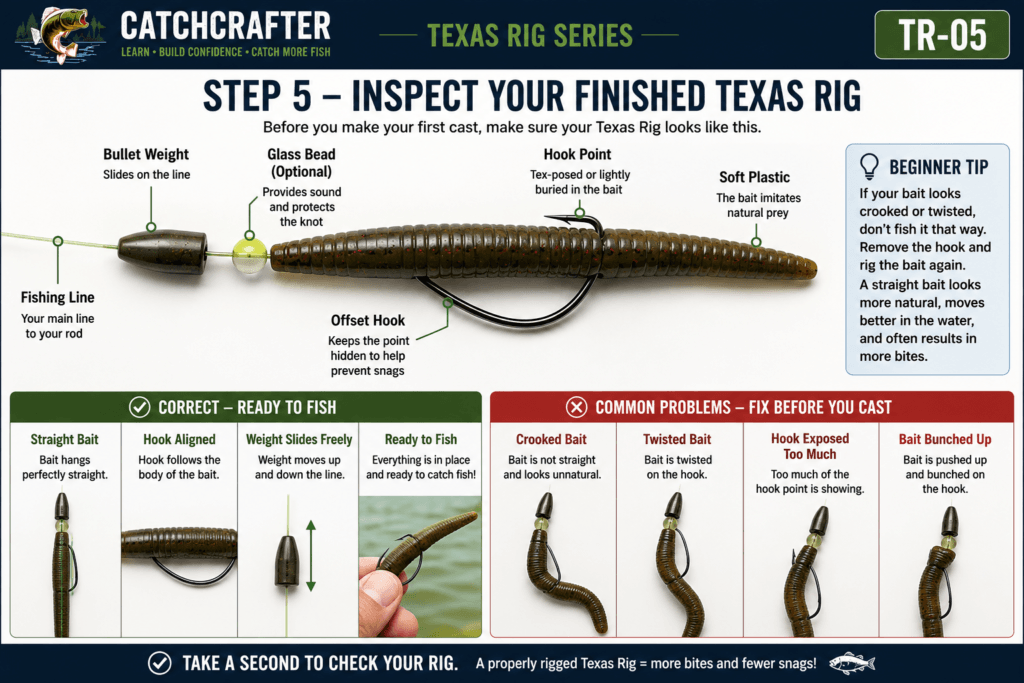
💡 Beginner Tip
If your bait looks crooked or twisted, don’t fish it that way. Remove the hook and rig the bait again. A straight bait looks more natural, moves better in the water, and often results in more bites.
Step 6 – When to Peg the Weight (Advanced Tip)
One advantage of a Texas Rig is that you can fish it with either a sliding (unpegged) bullet weight or a pegged weight. In most situations, allowing the weight to slide freely gives the bait a more natural presentation and is the setup most anglers use.
There are times, however, when pegging the weight is beneficial. When fishing heavy grass, thick vegetation, brush piles, or other dense cover, securing the weight against the hook helps the bait and weight stay together. This makes it easier to work through heavy cover and keep your presentation where the fish are holding.
For most beginners, start with an unpegged weight. As you gain experience and begin fishing heavier cover, you’ll learn when pegging the weight can improve your presentation.
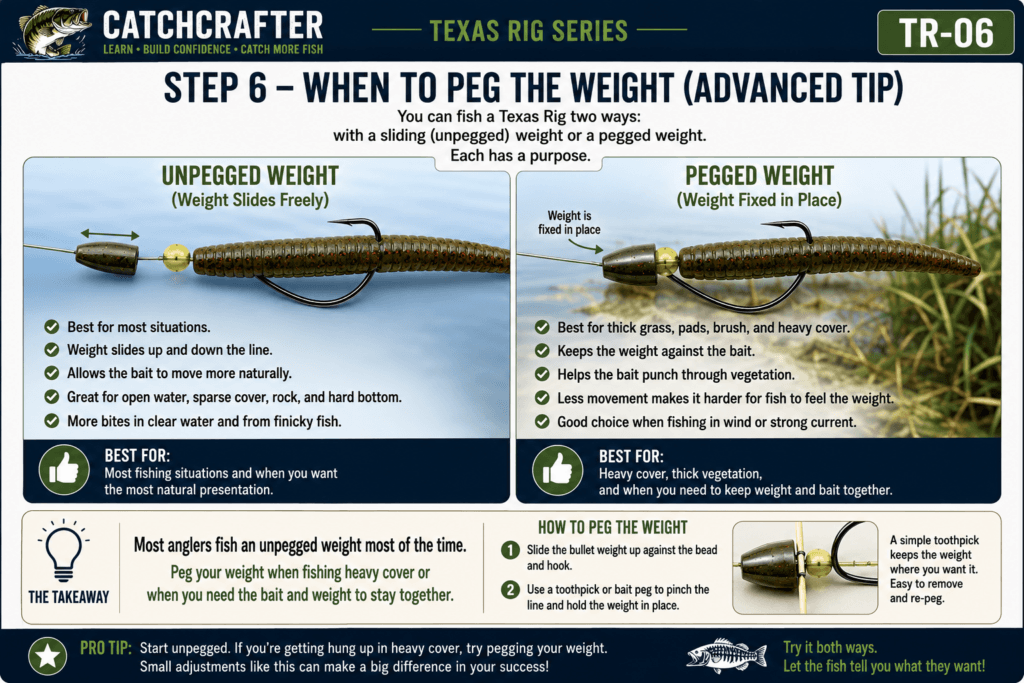
Beginner Tip: If you’re not sure which setup to use, fish an unpegged weight first. If you’re constantly getting hung up in heavy weeds or brush, try pegging the weight and compare the results. Small adjustments like this can make a big difference.
Where to Fish a Texas Rig
One of the biggest advantages of a Texas Rig is its ability to fish areas that many other lures can’t reach. Its weedless design allows anglers to present a soft plastic bait in places where bass naturally hide, increasing the chances of a strike while reducing frustrating snags.
Vegetation
Grass beds, lily pads, hydrilla, and milfoil are excellent places to fish a Texas Rig. Cast beyond the vegetation and slowly work the bait through openings and along the edges where bass often wait to ambush prey.
Fallen Trees and Brush
Bass frequently use submerged logs, fallen trees, and brush piles as cover. Pitch your Texas Rig beside the cover and allow it to fall naturally. Many strikes occur as the bait sinks next to the structure.
Boat Docks
Boat docks provide shade, protection, and a steady food source for bass. Skip or pitch your Texas Rig underneath docks and let it settle before slowly working it back toward you.
Rocky Structure
Rock piles, riprap, and points are excellent locations for a Texas Rig. Slowly drag or hop the bait along the bottom, allowing it to imitate a crawfish or other natural prey moving across the rocks.
Weed Edges
The edge where vegetation meets open water is one of the most productive places to fish. Bass often patrol these transition areas looking for an easy meal. A Texas Rig allows you to work both the vegetation and the open water with the same presentation.
💡 Beginner Tip
Whenever possible, cast past your target and bring the bait naturally into the strike zone. This approach is less likely to spook bass and gives your bait a more realistic presentation.
How to Fish a Texas Rig
One of the biggest mistakes beginners make is fishing a Texas Rig too quickly. Unlike many moving lures, a Texas Rig is designed to imitate natural prey such as crawfish, worms, and other creatures that move slowly along the bottom. Patience is often the key to success.
Let the Bait Sink
After making your cast, allow the bait to fall naturally to the bottom while watching your fishing line carefully. Many bass strike as the bait sinks, and the only indication may be your line suddenly moving, twitching, or stopping before it reaches the bottom.
Work the Bait Slowly
Once the bait reaches the bottom, gently lift your rod tip a few inches and slowly reel in the slack line. This causes the bait to hop or crawl naturally across the bottom. Pause frequently, as bass often strike when the bait is sitting still.
Fish the Cover Thoroughly
The Texas Rig excels around weeds, docks, brush piles, fallen trees, and rocky structure. Instead of making one quick cast and moving on, make several casts from different angles. Bass often position themselves on different sides of the same piece of cover.
Stay in Contact with Your Bait
Keep enough tension on the line to feel the bait without pulling it unnaturally. Learning to recognize the feel of rocks, weeds, wood, and bass takes practice, but staying connected to your bait is one of the fastest ways to improve your success.
Be Patient
The Texas Rig rewards patience. Slow presentations often outperform fast retrieves, especially when bass are inactive or holding close to cover. If you’re unsure whether you’re fishing slowly enough, slow down even more.
Detecting the Bite
Learning to recognize a bass bite is one of the most important skills an angler can develop. Unlike aggressive strikes on moving lures, bites on a Texas Rig are often subtle and easy to miss. The more time you spend fishing, the more you’ll learn to recognize the difference between a bass and the bottom.
Watch Your Line
One of the easiest ways to detect a bite is by watching your fishing line as the bait falls. If the line suddenly jumps, twitches, moves sideways, or stops before reaching the bottom, a bass may have picked up your bait.
Feel for Something Different
Sometimes a bite doesn’t feel like a sharp tug. It may feel like extra weight, a light tap, or simply something different than the normal feel of the bottom. If something feels unusual, it’s often worth preparing to set the hook.
Learn the Bottom
As you fish more, you’ll begin to recognize the difference between rocks, weeds, wood, and soft bottom. This familiarity helps you identify when something doesn’t feel right—often the first sign that a bass has your bait.
Don’t Rush
If you believe you’ve been bitten, lower your rod tip slightly while maintaining contact with the fish. If the line begins moving away or you feel steady pressure, prepare to set the hook.
💡 Beginner Tip
When in doubt, don’t ignore unusual line movement. Many experienced anglers follow a simple rule: If something feels different, assume it’s a fish until you prove otherwise.
Setting the Hook
Once you’ve recognized a bite, setting the hook correctly is essential for landing the fish. Many beginners either react too quickly or hesitate too long, giving the bass time to spit out the bait.
Reel Down First
When you believe a bass has your bait, avoid immediately jerking the rod. Instead, quickly reel in any slack line while lowering your rod tip slightly. This allows you to establish solid contact with the fish before setting the hook.
Drive the Hook Home
Once the line is tight and you feel the weight of the fish, make a firm upward sweep of the rod. A strong hookset helps drive the hook point through the soft plastic and into the bass’s mouth.
Keep Steady Pressure
After setting the hook, maintain steady pressure on the fish while reeling. Avoid giving the bass slack line, as this increases the chance of the fish throwing the hook during the fight.
Stay Calm
It’s easy to become excited when you feel your first Texas Rig bite, but staying calm will help you land more fish. Let your rod and drag do their jobs while guiding the bass away from heavy cover whenever possible.
💡 Beginner Tip
Many missed fish happen because anglers set the hook at the first tiny tap. If you’re unsure, reel down first, feel the fish, and then make a confident hookset. A smooth, controlled motion is usually more effective than an overly aggressive swing.
🎣 CatchCrafter Pro Tip
A good hookset begins before you move the rod. Eliminate slack line first. When the line is tight, your hookset transfers much more power to the hook, giving you a better chance of a solid hookup.
Common Beginner Mistakes
Even though the Texas Rig is one of the easiest bass fishing techniques to learn, beginners often make a few common mistakes that reduce their success. Fortunately, these mistakes are easy to correct with a little practice.
Fishing Too Fast
The Texas Rig is designed to imitate natural prey moving slowly along the bottom. One of the biggest mistakes beginners make is retrieving the bait too quickly. Slow down, pause often, and let the bait work naturally.
Using the Wrong Weight
A bullet weight that’s too heavy can make the bait look unnatural in shallow water, while a weight that’s too light may not reach the bottom effectively in deeper water or heavy cover. Match your weight to the fishing conditions.
Rigging the Bait Crooked
A soft plastic that hangs crooked won’t move naturally and may twist your fishing line. Take a few extra seconds to rig the bait straight before making your first cast.
Ignoring Line Movement
Many bass bites are detected by watching your fishing line rather than feeling a sharp strike. Always watch your line during the fall and while working the bait across the bottom.
Giving Up Too Soon
The Texas Rig rewards patience. If one spot doesn’t produce immediately, try making several casts from different angles before moving to a new location. Bass often hold tight to cover and may not react to the first presentation.
💡 Beginner Tip
Don’t worry if your first few trips don’t go perfectly. Every cast teaches you something new. The more time you spend fishing a Texas Rig, the more confident you’ll become in recognizing bites, working cover, and landing bass consistently.
Frequently Asked Questions
What is the best soft plastic for a Texas Rig?
A 5-inch stick worm is one of the best choices for beginners because it’s easy to rig, versatile, and consistently catches bass. As your confidence grows, craw baits, creature baits, finesse worms, and paddle tail swimbaits are also excellent options.
What size hook should I use for a Texas Rig?
For most beginner bass fishing situations, a 3/0 or 4/0 offset worm hook works well with common soft plastic baits. Larger baits may require a 5/0 hook, while smaller finesse baits often pair well with a 2/0 hook.
What bullet weight should I start with?
A 1/4-ounce bullet weight is an excellent all-around choice. It performs well in many fishing conditions and is a great starting point for anglers learning the Texas Rig.
Can I fish a Texas Rig all year?
Yes. The Texas Rig is one of the most versatile bass fishing techniques available and can be effective during spring, summer, fall, and winter. Adjusting your bait selection and presentation to match seasonal bass behavior will improve your success.
Is the Texas Rig good for beginners?
Absolutely. Its simple design, weedless presentation, and versatility make it one of the easiest and most productive bass fishing techniques for beginners to learn.
Why does my soft plastic keep sliding down the hook?
This usually happens because the bait isn’t threaded correctly or has become worn after catching fish. Rigging the bait straight and replacing damaged plastics when necessary will help keep your presentation looking natural.
Final Recommendation
The Texas Rig has earned its reputation as one of the most effective bass fishing techniques because it is simple, versatile, and capable of catching fish in almost any condition. Whether you’re fishing from the bank, a boat, or a kayak, it’s a presentation that belongs in every angler’s skill set.
If you’re just getting started, don’t worry about owning every hook, weight, or soft plastic on the market. Keep it simple. Start with a 3/0 offset worm hook, a 1/4-ounce bullet weight, and a 5-inch Green Pumpkin stick worm. This combination is easy to fish, forgiving for beginners, and proven to catch bass in a wide variety of situations.
Like any fishing technique, confidence comes with practice. Every cast teaches you something—how the bait feels, how it moves through cover, and how to recognize a bass bite. The more time you spend with a Texas Rig, the more natural it will become.
I hope this guide gives you the confidence to tie on your first Texas Rig and head to the water knowing you have one of the most productive bass fishing techniques ever developed.
Tight lines,
— Thaddeus, CatchCrafter
Have a favorite Texas Rig tip or a memorable catch? Share your experience in the comments below. I’d love to hear how the Texas Rig has worked for you!
Recommended Reading
Continue building your bass fishing knowledge with these CatchCrafter guides:
- Best Bass Fishing Rod and Reel Combos Under $100 – Choose a dependable setup that fits your budget.
- Best Fishing Line for Bass: Monofilament vs. Fluorocarbon vs. Braided Line – Learn which line is best for different fishing conditions.
- Best Soft Plastic Baits Every Beginner Should Own – Discover the soft plastics that pair perfectly with a Texas Rig.
- Best Bass Fishing Knots Every Angler Should Know – Master the knots that help keep fish securely hooked.
- Best Bass Fishing Lures for Beginners – Explore additional lures that every new bass angler should have in their tackle box.