Walking into a tackle shop or browsing online can be overwhelming for a new bass angler. With hundreds of different lures available in every shape, size, and color imaginable, it’s easy to wonder where to begin. The good news is that you don’t need to own every lure on the shelf to catch bass consistently.
In reality, a handful of proven lures will cover almost every bass fishing situation you’ll encounter. By learning when and how to use these lures, you’ll spend less time guessing and more time catching fish.
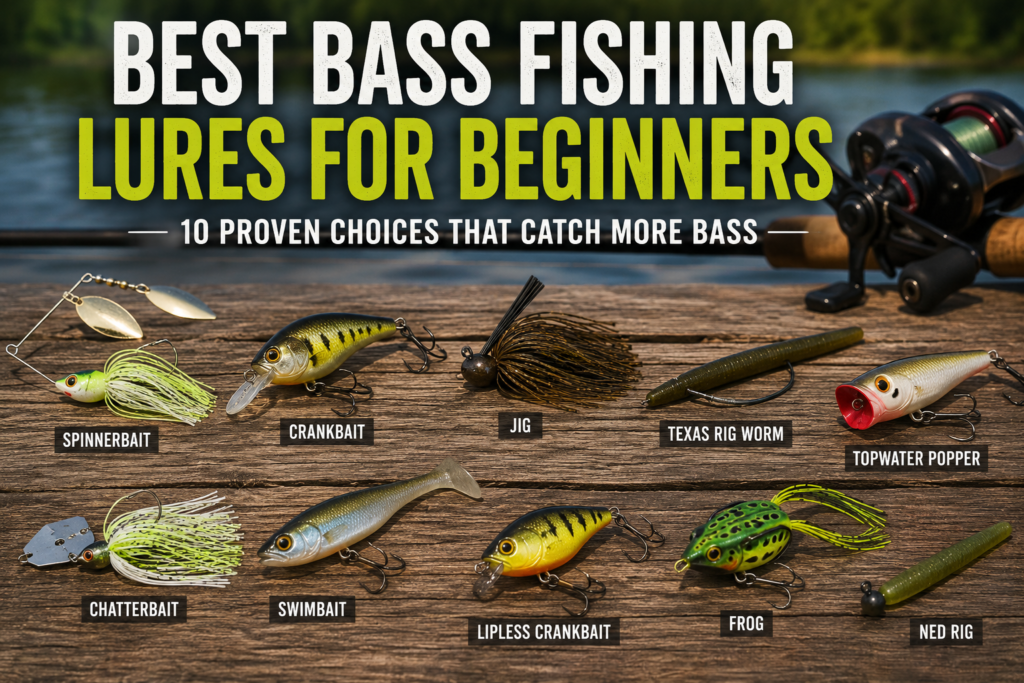
In this guide, I’ll introduce you to 10 of the best bass fishing lures for beginners, explain when each one works best, and help you build a simple tackle box that gives you confidence every time you head to the water.
Why Choosing the Right Lure Matters
Bass don’t always feed the same way. Their behavior changes with the seasons, water temperature, weather conditions, water clarity, and the type of cover they’re holding around. A lure that works exceptionally well one day may be ignored the next if conditions change.
Understanding when to use different types of lures will make you a more successful angler. Some lures are designed to cover large areas of water quickly, while others excel at tempting bass that are holding tight to structure or feeding cautiously.
The good news is that you don’t need dozens of different lures to catch bass consistently. By learning a handful of proven techniques and carrying a small selection of versatile lures, you’ll be prepared for most bass fishing situations you encounter.
| Lure | Best For | Difficulty | Best Season |
|---|---|---|---|
| Texas Rig Worm | All-Around Bass Fishing | Easy | Spring–Fall |
| Spinnerbait | Windy Days & Stained Water | Easy | Spring & Fall |
| Crankbait | Covering Water | Easy | All Season |
| Jig | Big Bass & Heavy Cover | Medium | All Season |
| Topwater Popper | Surface Action | Easy | Summer |
| Chatterbait | Grass & Vegetation | Easy | Spring & Fall |
| Swimbait | Natural Presentation | Easy | All Season |
| Lipless Crankbait | Searching Large Areas | Easy | Spring |
| Frog | Heavy Vegetation | Medium | Summer |
| Ned Rig | Finesse Fishing | Easy | All Season |
1. Texas-Rigged Soft Plastic Worm
⭐⭐⭐⭐⭐ Best Overall Lure for Beginners
If I could recommend only one lure to a new bass angler, it would be a Texas-rigged soft plastic worm. It’s simple to fish, incredibly versatile, and consistently catches bass in ponds, lakes, rivers, and reservoirs across the country.
The Texas rig is designed to be weedless, allowing you to fish around grass, weeds, fallen trees, docks, and other cover where bass often hide. Whether you’re fishing from the bank, a boat, or a kayak, it’s a presentation that works almost anywhere.
One of the biggest advantages of a Texas-rigged worm is that you can fish it slowly. Beginners often make the mistake of retrieving lures too quickly, but with a Texas rig, slow and steady usually produces the best results. Many bites occur as the worm slowly falls or rests on the bottom.
Pros
- Extremely versatile
- Weedless design reduces snags
- Easy for beginners to learn
- Effective in nearly every season
- Available in many colors and sizes
Cons
- Requires patience and a slower presentation
- Light bites can take practice to detect
Best For
- Beginners
- Fishing around weeds and cover
- Ponds, lakes, and rivers
- Spring, summer, and fall
- All-around bass fishing
👉 Check the current price of this Texas Rig Component Kits on Amazon.
💡 Beginner Tip: If you’re not getting bites, slow down. Many beginners fish a Texas-rigged worm too fast. Let it sink, pause, and move it with small hops or gentle drags.
2. Spinnerbait
⭐⭐⭐⭐⭐ Best for Covering Water Quickly
A spinnerbait is one of the easiest and most effective lures for beginners because it allows you to cover a lot of water in a short amount of time. Its spinning blades create flash and vibration that attract bass, making it especially effective in stained water, windy conditions, and around cover where fish rely more on vibration than sight.
Spinnerbaits are also surprisingly snag-resistant. Their wire frame helps deflect the hook away from weeds, brush, and submerged wood, allowing you to fish confidently around areas where bass like to hide.
Simply cast the lure, let it sink to your desired depth, and retrieve it at a steady pace. You can vary your retrieve speed until you find what the bass prefer.
Pros
- Easy to fish
- Covers water quickly
- Excellent in stained or muddy water
- Snag-resistant around cover
- Great search bait
Cons
- Can be less effective in very clear water
- Fish sometimes short-strike the blades without getting hooked
Best For
- Windy days
- Stained or muddy water
- Fishing around wood and weeds
- Locating active bass
- Spring and fall
👉 Check the current price of these Spinner Baits on Amazon.
💡 Beginner Tip
If you aren’t getting bites, try changing your retrieve speed. Sometimes bass prefer a slow, steady retrieve, while other days they’ll react to a faster presentation. Let the fish tell you what they want.
3. Crankbait
⭐⭐⭐⭐⭐ Best for Covering Water and Finding Active Bass
Crankbaits are excellent lures for beginners because they allow you to quickly cover large areas of water while searching for active bass. Their hard body and built-in diving lip create a realistic swimming action that imitates baitfish, making them effective throughout much of the year.
One of the biggest advantages of a crankbait is its ability to reach different depths. Shallow-diving crankbaits work well around shorelines, rocks, and submerged wood, while medium- and deep-diving models are designed to target bass holding in deeper water.
To fish a crankbait, simply cast it out and retrieve it at a steady pace. Occasionally pausing or changing your retrieve speed can trigger reaction strikes from bass that are following the lure.
Pros
- Easy to fish with a simple retrieve
- Covers water quickly
- Available in shallow, medium, and deep-diving models
- Effective for locating active bass
- Works in many different water conditions
Cons
- More likely to snag around rocks, brush, and heavy cover
- Choosing the correct diving depth takes a little practice
Best For
- Searching large areas of water
- Fishing around points, rock piles, and submerged structure
- Spring, summer, and fall
- Beginners learning to locate bass
👉 Check the current price of these Crankbaits on Amazon.
💡 Beginner Tip
Start with a shallow-diving crankbait if you’re fishing from the bank. It’s easier to avoid snags while still covering plenty of water. As you gain confidence, experiment with deeper-diving crankbaits to reach bass holding farther offshore.
4. Jig
⭐⭐⭐⭐⭐ Best for Catching Bigger Bass
A jig is one of the most versatile and productive bass lures ever created. While it may seem intimidating to beginners at first, learning to fish a jig can dramatically improve your success, especially when targeting larger bass around heavy cover.
Jigs are commonly paired with a soft plastic trailer to create a natural presentation that imitates crawfish or baitfish. They’re especially effective around docks, fallen trees, rocks, and thick vegetation where big bass often hide.
Fish a jig by allowing it to sink to the bottom, then slowly lift and lower your rod tip while reeling in the slack. Many bites happen as the jig falls or sits on the bottom, so pay close attention to your line for subtle strikes.
Pros
- Excellent for catching larger bass
- Highly versatile in many types of cover
- Effective year-round
- Realistic presentation with a soft plastic trailer
- Great around rocks, wood, and docks
Cons
- Requires more patience than moving lures
- Light bites can be difficult for beginners to detect
- Takes practice to develop confidence
Best For
- Fishing heavy cover
- Targeting larger bass
- Docks, timber, rocks, and vegetation
- Spring, summer, fall, and winter
👉 Check the current price of these Jig Kits on Amazon.
💡 Beginner Tip
Start with a 3/8-ounce casting jig in a natural color such as green pumpkin or black and blue. Fish it slowly, and don’t be afraid to let it sit for a few seconds. Many beginners retrieve a jig too quickly, but patience often leads to bigger bass.
5. Topwater Popper
⭐⭐⭐⭐⭐ Best for Exciting Surface Strikes
Few eperiences in bass fishing are as exciting as watching a bass explode on a topwater lure. Topwater poppers are designed to create splashing and popping sounds on the surface, attracting bass that are actively feeding near the top of the water.
Topwater fishing is most productive during the early morning, late evening, or on overcast days when bass are more likely to feed near the surface. Poppers work especially well around docks, weed edges, fallen trees, and calm shorelines.
To fish a popper, cast it out and allow the water to settle before beginning your retrieve. Use short twitches of your rod tip to create a “pop…pop…pause” action. Many strikes occur during the pause, so resist the temptation to retrieve the lure too quickly.
Pros
- Exciting visual strikes
- Easy for beginners to learn
- Excellent during low-light conditions
- Effective around shallow cover
- Great confidence-building lure
Cons
- Less effective during the middle of hot, sunny days
- Windy conditions can reduce effectiveness
- Requires patience during pauses
Best For
- Early morning and late evening fishing
- Calm water conditions
- Fishing around docks, weed edges, and shoreline cover
- Summer and early fall
- Beginners learning topwater techniques
👉 Check the current price of these Topwater Poppers on Amazon
💡Beginner Tip
After making your cast, let the lure sit for a few seconds before moving it. A slow “pop…pop…pause” retrieve often outperforms a constant retrieve because bass frequently strike while the lure is sitting still.
6. Chatterbait
⭐⭐⭐⭐⭐ Best for Fishing Around Grass and Cover
A chatterbait, also known as a bladed jig, has become one of the most productive bass lures in recent years. Its vibrating metal blade creates strong vibration and flash that attract bass in both clear and stained water. For beginners, it’s a great lure because it’s easy to fish and consistently catches bass in a variety of conditions.
Chatterbaits are especially effective around submerged grass, weed edges, docks, and shallow cover where bass are actively feeding. The vibration helps bass locate the lure, even when visibility is poor.
Simply cast the chatterbait, let it sink to your desired depth, and retrieve it with a slow to medium, steady pace. Occasionally changing your retrieve speed or pausing briefly can trigger aggressive strikes.
Pros
- Easy to fish with a steady retrieve
- Excellent around grass and vegetation
- Produces strong vibration that attracts bass
- Effective in clear and stained water
- Great for covering water quickly
Cons
- Can collect weeds in very heavy vegetation
- Not as weedless as a Texas-rigged worm
- Requires occasional cleaning when fishing around grass
Best For
- Fishing around grass and weed edges
- Shallow cover
- Spring, summer, and fall
- Stained or slightly muddy water
- Beginners looking for a versatile moving bait
💡 Beginner Tip
If your chatterbait picks up a few strands of grass, don’t immediately reel it in. A quick snap of the rod tip often clears the weeds and can trigger an immediate reaction strike from a following bass.
7. Swimbait
⭐⭐⭐⭐⭐ Best for Natural Baitfish Imitation
Swimbaits are designed to imitate the natural swimming action of baitfish, making them one of the most realistic lures available for bass fishing. Their lifelike appearance and smooth movement can fool even cautious bass into striking.
For beginners, paddle-tail soft swimbaits are an excellent place to start. They’re easy to rig on a jig head or swimbait hook and require only a slow, steady retrieve to produce a realistic swimming action.
Swimbaits are effective in both clear and slightly stained water and can be fished around weed edges, points, docks, and open water. Because they closely resemble the bass’s natural forage, they’re productive throughout much of the year.
Pros
- Natural-looking presentation
- Easy to retrieve with a steady pace
- Effective in a variety of water conditions
- Available in many sizes and colors
- Great for beginners
Cons
- Soft plastic swimbaits can tear after catching several fish
- Some larger swimbaits can be expensive
- May require different jig head weights for various depths
Best For
- Clear to slightly stained water
- Weed edges and open water
- Spring, summer, and fall
- Fishing around schools of baitfish
- Beginners wanting a simple, effective lure
💡 Beginner Tip
Match the size of your swimbait to the baitfish in the water. A 3- to 4-inch paddle-tail swimbait is an excellent all-around choice for beginners and is effective on most lakes and ponds.
8. Lipless Crankbait
⭐⭐⭐⭐⭐ Best for Covering Water Quickly in Spring
A lipless crankbait is a fast-moving lure that excels at covering large areas of water while searching for active bass. Unlike traditional crankbaits, lipless models have no diving lip and sink naturally, allowing anglers to fish them at various depths.
These lures create strong vibration and rattling sounds that trigger reaction strikes, making them especially effective during the spring when bass are actively feeding. Lipless crankbaits also perform well around grass flats, points, and open water where you can vary your retrieve speed.
Cast the lure, allow it to sink to your desired depth, and retrieve it with a steady pace. Occasionally ripping the lure free from submerged grass or changing retrieve speeds often triggers aggressive strikes.
Pros
- Covers water quickly
- Strong vibration attracts bass
- Effective at multiple depths
- Great search bait
- Excellent during spring
Cons
- More likely to snag than weedless lures
- Can require practice to fish around heavy cover
Best For
- Spring bass fishing
- Grass flats
- Open water
- Searching for active fish
- Beginners wanting to cover lots of water
💡 Beginner Tip
If your lure catches a few strands of grass, give your rod a quick snap instead of immediately reeling in. That sudden burst often causes the lure to break free and can trigger an instant strike from a nearby bass.
9. Frog
⭐⭐⭐⭐⭐ Best for Fishing Heavy Vegetation
Hollow-body frogs are designed to fish in places where many other lures would constantly get snagged. Their weedless design allows anglers to cast into thick lily pads, matted grass, hydrilla, and other heavy vegetation where big bass often hide.
Fishing a frog can produce some of the most explosive strikes in bass fishing. Watching a bass explode through heavy cover to attack a frog on the surface is an experience every angler should enjoy at least once.
To fish a frog, cast it into or across heavy vegetation and retrieve it with slow twitches and occasional pauses. Bass often strike during the pause, so resist the urge to reel too quickly.
Pros
- Nearly weedless
- Excellent for heavy vegetation
- Produces exciting topwater strikes
- Can catch very large bass
- Great around lily pads and matted grass
Cons
- Requires patience and good timing on hooksets
- Less effective in open water
- Beginners may miss strikes by setting the hook too quickly
Best For
- Lily pads
- Thick grass and vegetation
- Summer fishing
- Heavy cover
- Targeting larger bass
💡 Beginner Tip
When a bass strikes your frog, resist the urge to set the hook immediately. Wait until you feel the weight of the fish before setting the hook. This simple pause can dramatically increase your hook-up ratio.
10. Ned Rig
⭐⭐⭐⭐⭐ Best for Finesse Fishing and Tough Conditions
The Ned Rig has become one of the most popular finesse techniques in bass fishing, especially when the bite is slow. It consists of a small soft plastic bait attached to a light mushroom-style jig head, creating a subtle presentation that bass often can’t resist.
One of the biggest advantages of the Ned Rig is its simplicity. Cast it out, let it sink to the bottom, and retrieve it slowly with small hops or gentle drags. Its natural action makes it an excellent choice when bass are pressured, inactive, or feeding cautiously.
Although it’s a finesse technique, don’t be surprised if a Ned Rig catches some of the biggest bass in the lake. Its subtle presentation often convinces fish that ignore larger, louder lures.
Pros
- Extremely effective when bass are inactive
- Easy to learn and fish
- Inexpensive tackle
- Excellent in clear water
- Works throughout the year
Cons
- Light weight limits casting distance
- Less effective in heavy vegetation
- Can snag around rocks if fished too aggressively
Best For
- Clear water
- Pressured lakes and ponds
- Cold fronts and slow fishing days
- Spring, summer, fall, and winter
- Beginners learning finesse techniques
💡 Beginner Tip
When fishing a Ned Rig, slow down. Let the bait sit on the bottom for a few seconds between movements. Many bites happen while the lure is resting, so patience often leads to more fish.
Frequently Asked Questions
What is the best bass fishing lure for beginners?
A Texas-rigged soft plastic worm is one of the best lures for beginners because it’s easy to fish, works in many conditions, and consistently catches bass. Spinnerbaits and crankbaits are also excellent choices for anglers just getting started.
How many bass lures do I really need?
You don’t need a tackle box full of lures to catch bass. A small selection that includes a Texas-rigged worm, spinnerbait, crankbait, jig, and topwater popper will cover most bass fishing situations.
What color bass lure should I use?
Natural colors such as green pumpkin, watermelon, and shad patterns work well in clear water. In stained or muddy water, brighter colors like chartreuse, white, and black-and-blue are often easier for bass to see.
What is the easiest lure to fish?
Spinnerbaits and soft plastic worms are among the easiest lures for beginners. They require simple retrieves and are effective in a wide variety of fishing conditions.
Do expensive bass lures catch more fish?
Not necessarily. Many affordable lures catch just as many bass as premium models when they’re used in the right conditions. Learning how and when to fish a lure is often more important than how much it costs.
Final Recommendation
If you’re just getting started with bass fishing, don’t feel like you need to buy every lure on the tackle shop shelf. A small selection of proven lures will help you catch bass in almost any situation while building your confidence on the water.
If I were building my first bass tackle box today, I’d start with these five lures:
- Texas-Rigged Soft Plastic Worm
- Spinnerbait
- Crankbait
- Jig
- Topwater Popper
These lures cover a wide range of fishing conditions and techniques, giving you the versatility to fish ponds, lakes, rivers, and reservoirs throughout much of the year.
As your experience grows, you can expand your tackle collection by adding chatterbaits, swimbaits, frogs, lipless crankbaits, and Ned rigs to handle more specialized situations.
The best lure is the one you learn to fish with confidence. Spend time practicing with a few proven lures instead of constantly switching between dozens of options. You’ll become a better angler and enjoy more success on the water.
Most importantly, remember that bass fishing is about more than catching fish. It’s about enjoying the outdoors, learning something new every trip, and making memories with family and friends.
I hope this guide helps you spend less time wondering what lure to tie on and more time enjoying your time on the water.
If you have a favorite bass lure or a tip that’s worked well for you, I’d love to hear about it in the comments below.
Tight lines,
— Thaddeus, CatchCrafter
Recommended Reading
If you found this guide helpful, you may also enjoy these CatchCrafter articles:
- Best Bass Fishing Rod and Reel Combos Under $100 – Learn how to choose an affordable rod and reel combo that matches your fishing style.
- Best Fishing Line for Bass: Monofilament vs. Fluorocarbon vs. Braided Line – Discover which fishing line is best for different bass fishing techniques and conditions.