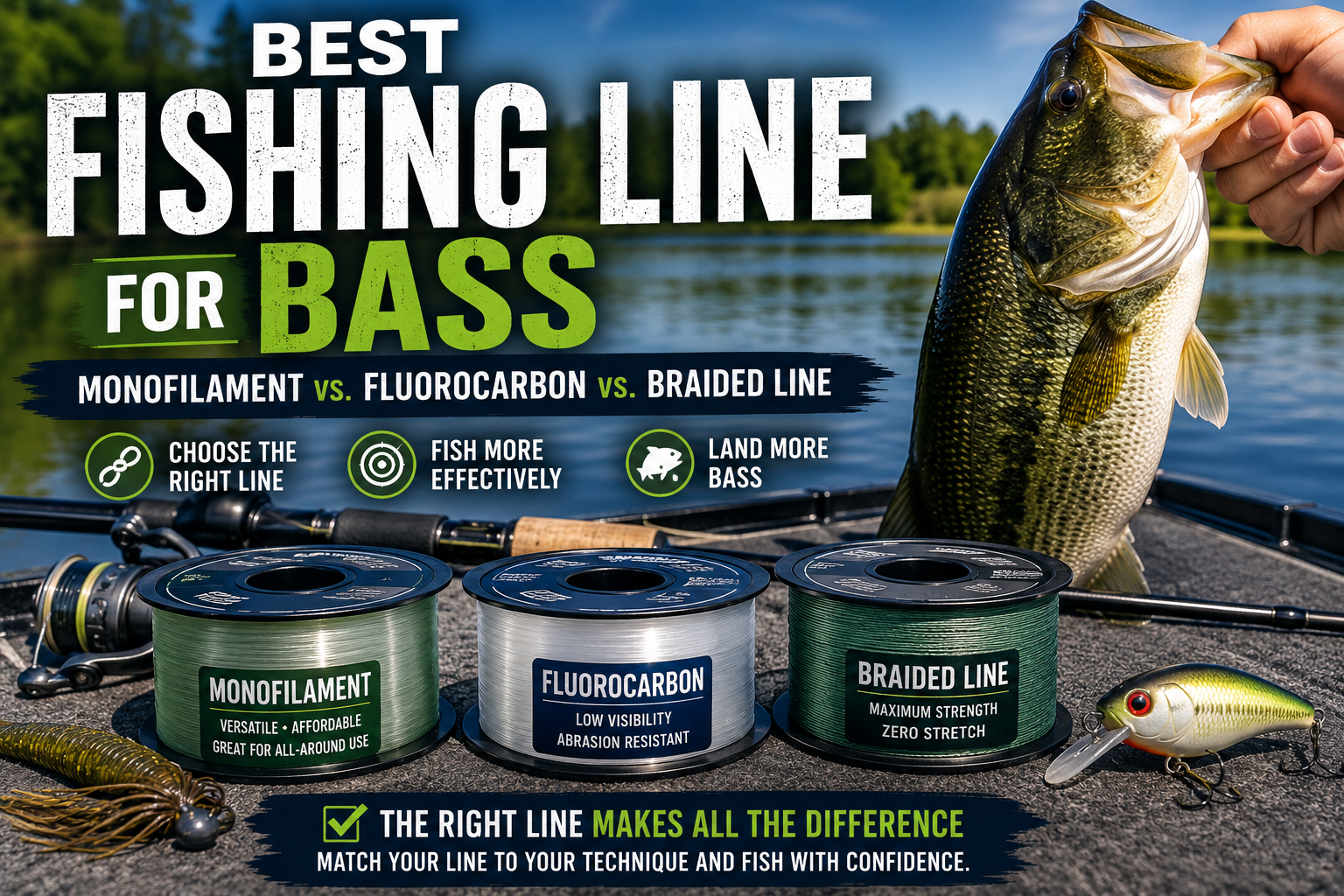
Choosing the right fishing line is just as important as selecting the right rod, reel, or lure. The line is your direct connection to the fish, and using the wrong type can affect casting distance, lure action, hooksets, and your ability to land bass successfully.
With so many options available, it’s easy to feel overwhelmed. Monofilament, fluorocarbon, and braided lines each have their own strengths and are designed for different fishing situations. Understanding when and where to use each type will help you fish more effectively and increase your confidence on the water.
In this guide, I’ll explain the differences between the three main types of bass fishing line, discuss their advantages and disadvantages, and help you choose the best option based on your fishing style, water conditions, and favorite bass fishing techniques.
Why Your Fishing Line Matters
| Fishing Line Type | Best For | Visibility Underwater | Stretch | Strength |
|---|---|---|---|---|
| Monofilament | Beginners, Topwater Fishing | High | High | Good |
| Fluorocarbon | Clear Water, Soft Plastics | Very Low | Low | Very Good |
| Braided Line | Heavy Cover, Frogs, Punching | High | Very Low | Excellent |
Monofilament Fishing Line
⭐⭐⭐⭐⭐ Best All-Around Choice for Beginners
Monofilament has been one of the most popular fishing lines for decades, and for good reason. It’s affordable, easy to handle, and forgiving, making it an excellent choice for anglers who are just getting started with bass fishing.
One of monofilament’s biggest advantages is its stretch. That extra stretch acts like a shock absorber during hooksets and while fighting fish, helping reduce the chance of pulling the hook free. It also floats, making it one of the best choices for topwater lures such as poppers, buzzbaits, and walking baits.
Although monofilament is more visible underwater than fluorocarbon, bass are often willing to strike even when they can see the line, especially in stained water or low-light conditions.
Pros
- Affordable and widely available
- Easy to cast and manage
- Excellent knot strength
- Floats for topwater fishing
- Great choice for beginners
Cons
- More visible underwater
- Stretches more than other line types
- Can weaken with prolonged sunlight exposure
Best For
- Beginning bass anglers
- Topwater fishing
- General-purpose fishing
- Ponds and small lakes
- Anglers looking for an economical fishing line
Fluorocarbon Fishing Line
⭐⭐⭐⭐⭐ Best for Clear Water and Bottom-Contact Lures
Fluorocarbon fishing line has become a favorite among serious bass anglers because it’s nearly invisible underwater and offers excellent sensitivity. When fishing in clear water or targeting cautious bass, fluorocarbon can give you an advantage by making your presentation appear more natural.
Unlike monofilament, fluorocarbon sinks, making it an excellent choice for soft plastics, jigs, Texas rigs, Carolina rigs, and crankbaits that are designed to reach deeper water. Its low stretch also helps you detect subtle bites and deliver solid hooksets, especially when fishing around rocks, points, and underwater structure.
Although fluorocarbon costs more than monofilament and can be a little stiffer to manage, many anglers feel the increased sensitivity and reduced visibility are well worth the investment.
Pros
- Nearly invisible underwater
- Excellent sensitivity
- Low stretch for solid hooksets
- Highly abrasion resistant
- Sinks quickly for bottom presentations
Cons
- More expensive than monofilament
- Can be stiffer and harder to manage
- Knots require careful tying to prevent slipping
Best For
- Clear-water bass fishing
- Texas rigs
- Carolina rigs
- Jigs and soft plastics
- Crankbaits and other diving lures
- Experienced anglers looking for maximum sensitivity
Braided Fishing Line
⭐⭐⭐⭐⭐ Best for Heavy Cover and Maximum Strength
Braided fishing line is the strongest option available for its diameter, making it the preferred choice when fishing around thick weeds, lily pads, fallen trees, docks, and other heavy cover. Because braided line has virtually no stretch, it provides outstanding sensitivity, allowing you to detect even the lightest bites and make powerful hooksets.
One of braid’s biggest advantages is its incredible strength. A 30-pound braided line has a diameter similar to much lighter monofilament, allowing anglers to spool more line while maintaining excellent casting distance. This makes it an excellent choice for techniques such as flipping, pitching, punching heavy vegetation, and fishing topwater frogs.
The downside is that braided line is highly visible underwater. In clear water, many anglers add a fluorocarbon leader to make the presentation less noticeable while still benefiting from braid’s strength and sensitivity.
Pros
- Exceptional strength for its diameter
- Virtually no stretch for maximum sensitivity
- Excellent casting distance
- Cuts through weeds and vegetation
- Long-lasting and highly durable
Cons
- Highly visible underwater
- Can be more expensive initially
- Requires specific knots for the best performance
- Not always the best choice for clear water without a leader
Best For
- Heavy vegetation
- Frog fishing
- Punching and flipping
- Thick cover
- Fishing around docks and timber
- Experienced bass anglers
Choosing the Right Pound Test for Bass Fishing
Selecting the right pound test is just as important as choosing the right type of fishing line. Using line that’s too light can result in lost fish, while line that’s too heavy may reduce casting distance and make your presentation less natural. The best choice depends on where you’re fishing, the cover you’re targeting, and the techniques you plan to use.
8–10 lb Test
This is an excellent choice for finesse techniques such as drop shots, shaky heads, and small soft plastics. Lighter line casts farther and performs well in clear water where bass may be more cautious.
10–12 lb Test
For many anglers, this is the best all-around choice for bass fishing. It handles spinnerbaits, crankbaits, worms, and other popular lures while providing a good balance between strength and casting performance.
15–20 lb Fluorocarbon
When fishing jigs, Texas rigs, Carolina rigs, or heavier cover, stepping up to 15–20 lb fluorocarbon provides additional abrasion resistance and hook-setting power without sacrificing too much sensitivity.
30–50 lb Braided Line
Braided line in the 30–50 lb range is ideal for fishing heavy vegetation, lily pads, timber, and thick cover. Many bass anglers also use braided line with a fluorocarbon leader to combine braid’s strength with fluorocarbon’s low visibility.
Match Your Line to the Conditions
There isn’t one perfect fishing line for every situation. Successful anglers adjust their line based on water clarity, the type of cover they’re fishing, and the lures they’re using. Understanding when to use each line type will help you catch more bass and fish with greater confidence.
Frequently Asked Questions
What is the best fishing line for bass?
There isn’t one fishing line that’s best for every situation. Monofilament is an excellent all-around choice for beginners, fluorocarbon performs exceptionally well in clear water and for bottom-contact lures, while braided line is the best option for fishing heavy cover and thick vegetation.
Should beginners use monofilament or braided line?
For most beginners, monofilament is the best place to start. It’s affordable, easy to handle, ties knots well, and is more forgiving than braided line. As your experience grows, you can experiment with fluorocarbon and braided line for specific techniques.
Can I use braided line on a spinning reel?
Yes. Braided line works very well on spinning reels, especially for finesse fishing. Many anglers use braided line with a fluorocarbon leader to combine the strength and sensitivity of braid with the low visibility of fluorocarbon.
How often should I replace my fishing line?
Monofilament and fluorocarbon should generally be replaced at least once each fishing season, or sooner if they show signs of wear, memory, or abrasion. Braided line lasts much longer, but it should still be inspected regularly for fraying or damage.
What pound test should I use for bass fishing?
For most bass fishing situations, 10–12 lb monofilament or fluorocarbon is an excellent all-around choice. When fishing heavy vegetation or thick cover, many anglers prefer 30–50 lb braided line for its superior strength and durability.
Final Recommendation
Choosing the best fishing line for bass comes down to understanding where you’re fishing and the techniques you use most often. Each type of line offers unique advantages, and no single option is perfect for every situation.
If I could recommend just one line for someone getting started with bass fishing, it would be 10 lb monofilament. It’s affordable, easy to cast, forgiving, and versatile enough to handle a wide variety of bass fishing techniques. As your experience grows, adding fluorocarbon and braided line to your tackle collection will allow you to fish more effectively in different conditions.
For clear water and bottom-contact presentations such as Texas rigs and jigs, fluorocarbon is an excellent choice because of its low visibility and sensitivity. When fishing thick weeds, lily pads, or heavy cover, braided line provides unmatched strength and hook-setting power.
The best anglers know that success isn’t just about buying the most expensive gear—it’s about choosing the right equipment for the conditions and having the confidence to use it. Experiment with different line types, practice your techniques, and you’ll quickly discover which setup works best for your style of fishing.
If you found this guide helpful, be sure to check out my other CatchCrafter articles on choosing the best bass fishing rod and reel combos, selecting the right lures, and improving your bass fishing techniques.
What’s your favorite fishing line for bass? Leave a comment below and share your experience. I’d love to hear what works best for you.
Tight lines!
Recommended Reading: Looking for the perfect setup? Check out my guide to